
Testing guides
Short-term kits, long-term tests and continuous monitors: what each measures, what it costs and how to read the result.
Every radon test measures the same thing — picocuries of radon per liter of air — but the devices differ in how long they average and what that average can support. A $20 short-term kit is a screening tool. A $150–$250 certified measurement is a document. Knowing which one your decision needs is the whole game.
The three consumer options
| Test | Period | Cost | Best for |
|---|---|---|---|
| Short-term kit | 2–4 days | $15–$45 | Screening, post-mitigation check |
| Long-term kit | 90+ days | $20–$50 | Deciding whether to mitigate |
| Continuous monitor | Continuous | $100–$200 | Daily patterns, fan verification |
Full comparison: kits, monitors and lab results →
Certified measurement
A certified tester brings a calibrated device, follows EPA protocols, documents chain of custody, and produces a report a buyer or lender will accept. Cost: $150–$250. In states that license radon professionals the credential is verifiable; elsewhere, ask for NRPP certification. This is the version used for real-estate transactions and as the baseline before mitigation.
The closed-house protocol
EPA protocols call for closed-house conditions for 12 hours before and throughout the test: windows and exterior doors closed, exhaust fans off, normal heating and cooling allowed. Place the device at breathing height in the lowest lived-in level, at least 20 inches off the floor, away from exterior walls, drafts and heat. Most bad results are bad tests, not bad houses.
Reading the number
4 pCi/L is EPA's action level: fix at or above it. Between 2 and 4 pCi/L, consider fixing — a long-term test is the better next step than a second four-day snapshot. Below 2 pCi/L, keep the report and retest every two years or after a major renovation.
Where the state programs fit
Many state radon programs sell subsidised short-term kits and publish county maps and certified-professional lists. A state kit is the cheapest legitimate first test; it is not the document a closing requires. Our state cost guide explains what changes from state to state.
Frequently asked questions
How accurate are DIY radon test kits?
EPA says properly used devices give practical, affordable and reliable results. Placement, closed-house conditions, weather and lab handling all affect the number, so a borderline result deserves a second test.
What time of year should I test?
Winter, when the house is closed and the heating season is running, usually gives the highest and most conservative reading. Any test run under closed-house conditions is valid.
Can a monitor replace a lab test?
Not for a real-estate transaction or a mitigation decision. A monitor is useful for watching patterns and confirming that a fan is working, but EPA does not treat it as a substitute for a lab-based result.
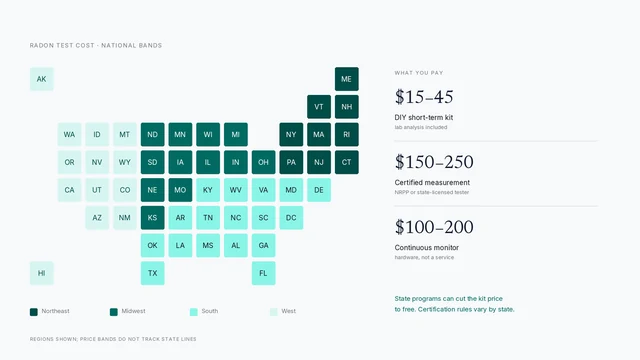
How much does a radon test cost in each state
Radon test prices by state: DIY kits, certified measurements and monitors, plus which state programs subsidise kits and where licensing changes the bill.
Read the guide →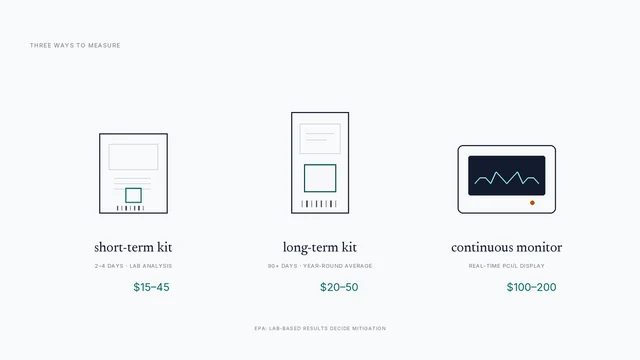
Radon test kits vs monitors: what each one measures
Short-term kits, long-term kits and continuous monitors measure radon in different ways. Prices, accuracy, placement rules and how to read a pCi/L result.
Read the guide →All testing guides
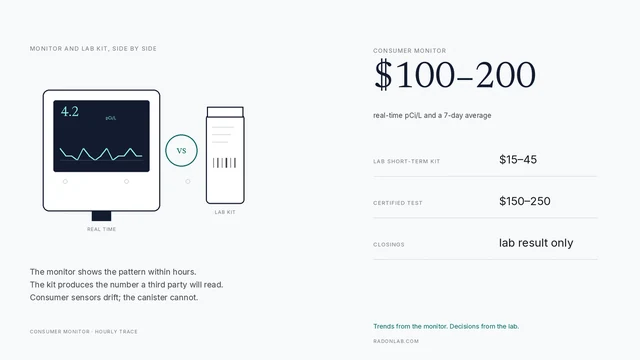
Are continuous radon monitors accurate?
Consumer radon monitors cost $100–$200 and update in real time. What their 7-day average is worth, where calibration drifts, and when to confirm with a lab kit.
Read the guide →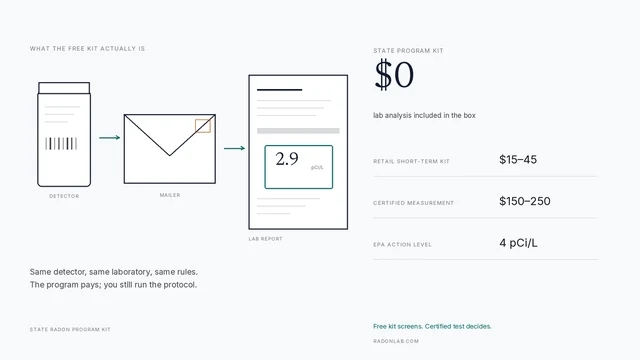
Are free radon test kits good enough?
State programs give away short-term radon kits, often in January. The detector is the same lab-grade device you would buy; the protocol decides the result.
Read the guide →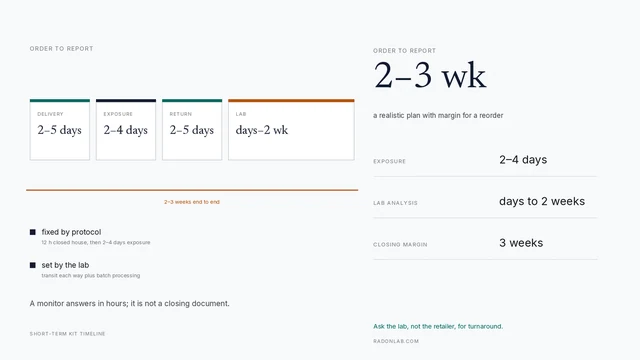
How long do radon test results take?
Two to four days for the test, then shipping and lab analysis. Why results usually take days to a couple of weeks, and how to plan a closing date with margin.
Read the guide →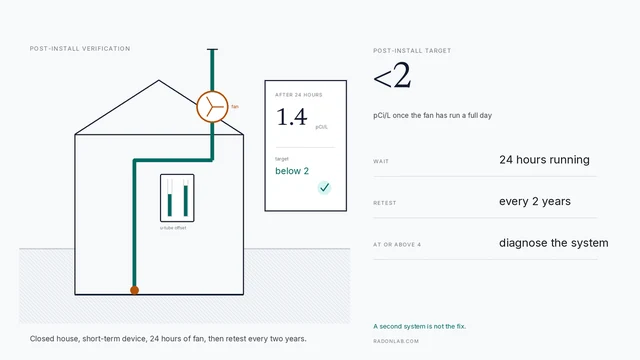
Radon test after mitigation: what to expect
Wait 24 hours, then run a short-term test under closed-house conditions. The target is below 2 pCi/L; at or above 4 means diagnosis, not a new system.
Read the guide →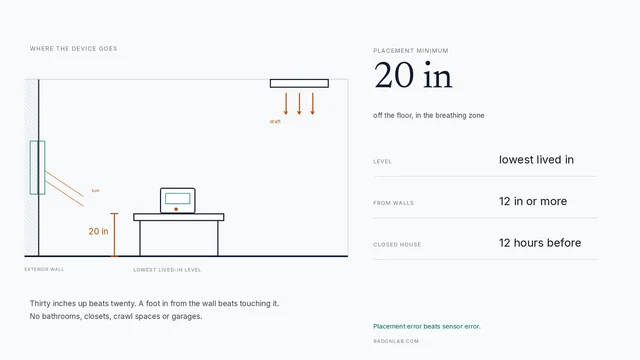
Radon test placement mistakes
Twenty inches off the floor, lowest lived-in level, away from exterior walls, drafts, heat and sun. The placement errors that quietly change a pCi/L result.
Read the guide →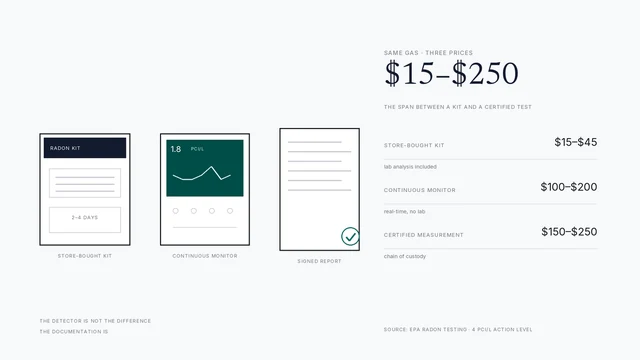
Store-bought vs professional radon test: what you get
A kit costs $15–$45, a certified measurement $150–$250. What the extra money buys, when a kit is enough and when a closing needs a signed report.
Read the guide →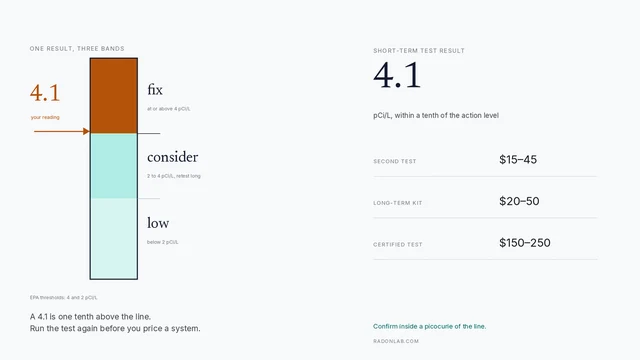
What your radon test result means
4 pCi/L is the action level, 2–4 is the consider-fixing band, below 2 is low. What a 4.1 really says, why repeat tests disagree, and what a system should reach.
Read the guide →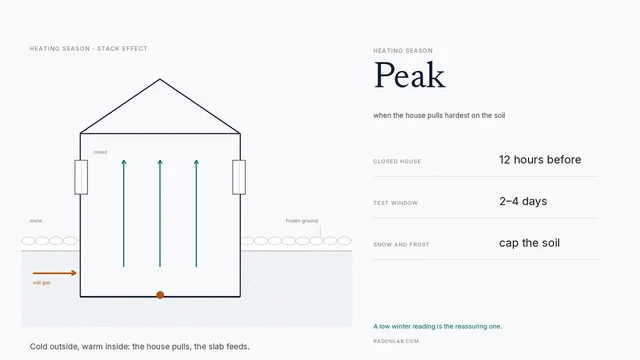
Winter radon levels explained
Why radon reads higher in winter: stack effect, a sealed house, frozen ground and snow. What a heating-season test proves, and why summer results still count.
Read the guide →