Crawl Space Radon Mitigation Cost: What to Expect
Detailed breakdown of crawl space radon mitigation costs, system types, and ongoing expenses for US homeowners.
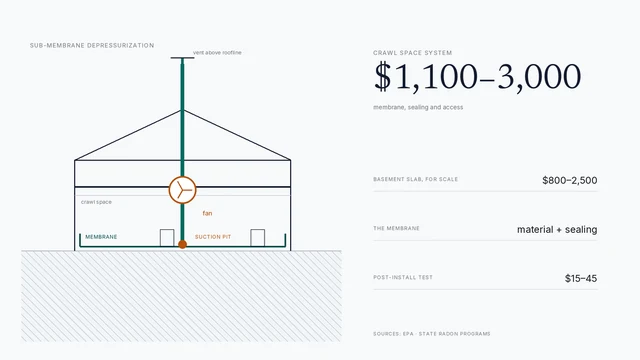
Crawl space radon mitigation typically costs $1,100 to $3,000 installed, with most sub-membrane systems averaging near the middle of that range plus about $127 per year in fan electricity.
- Typical installed cost (sub-membrane)
- $1,100–$3,000
- Crawl space ASD average
- ~$1,200
- Fan electricity per year
- ~$127
- Fan replacement
- $150–$450 every 5–15 years
- EPA action level
- 4 pCi/L
Some links on this page are affiliate links.If you buy through them we may earn a commission at no extra cost to you. We do not accept payment for rankings. Read the full disclosure.
Crawl space radon mitigation typically costs between $1,100 and $3,000 installed, depending on the size of the crawl space, the type of membrane used, and whether electrical work is needed. For most homes, a sub-membrane depressurization system falls near the middle of that range. Ongoing costs are modest, mainly fan electricity and occasional fan replacement.
If your test result is at or above the EPA action level of 4 pCi/L, mitigation is recommended. Results between 2 and 4 pCi/L fall into the EPA’s “consider fixing” range, and the World Health Organization reference level is 2.7 pCi/L. The average indoor radon level in the United States is about 1.3 pCi/L, compared with 0.4 pCi/L outdoors. Roughly one in 15 homes is estimated to have elevated radon, and millions of homes may need mitigation. A properly installed system should bring post-mitigation levels below 2 pCi/L, and typically under 2 pCi/L overall.
You can start by reviewing your radon test results. If you have not tested recently, see our guide on testing for radon for short-term and long-term options.
How Crawl Space Radon Mitigation Works
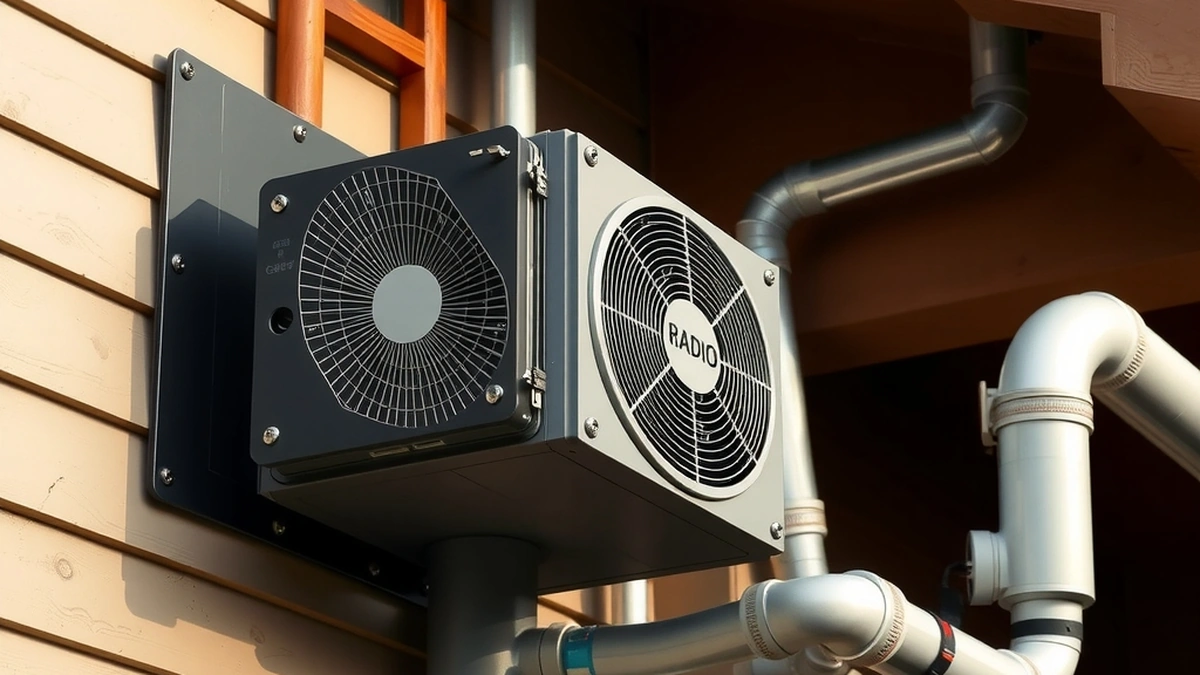
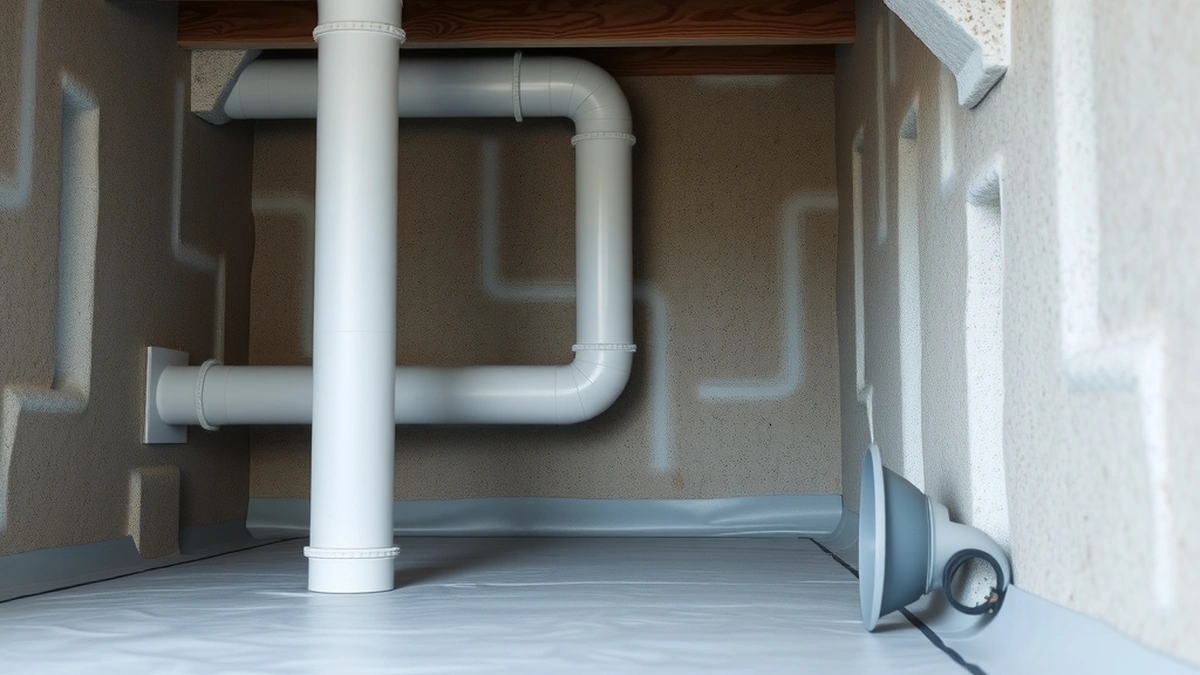
Crawl spaces are a common radon entry point because soil gases can move directly into the home through bare earth, cracks, and unsealed penetrations. The most common fix is sub-membrane depressurization. A durable plastic membrane is laid over the crawl space floor and sealed at the edges and around penetrations. A small fan creates negative pressure beneath the membrane, drawing radon-laden soil gas before it can enter the living space and venting it outside through a pipe.
Other approaches exist depending on the crawl space configuration. Drain tile depressurization uses existing perimeter drains as the collection point. Block wall depressurization applies to crawl spaces with hollow masonry walls. Heat recovery ventilators (HRVs) can dilute radon but are less common for crawl spaces because they condition the entire air volume and carry higher operating costs.
Passive systems, which rely on natural pressure differences without a fan, cost less to install but are less reliable in crawl spaces. A passive system can sometimes be activated later by adding a fan.
Installed Cost by System Type
The table below shows national installed cost ranges for radon mitigation methods. Crawl space projects most often use sub-membrane depressurization, but the other rows apply when site conditions match.
| System type | Typical installed cost |
|---|---|
| Active soil depressurization (ASD) | $800–$2,500 |
| Sub-membrane depressurization (crawl space) | $1,100–$3,000 |
| Drain tile depressurization | $800–$2,500 |
| Block wall depressurization | $1,000–$3,000 |
| Passive system (no fan) | $500–$1,500 |
| Passive system activation (add fan later) | $300–$900 |
| HRV ventilation | $1,200–$3,500 |
ASD averages about $1,200 nationally. Sub-membrane systems often cost a bit more because of the membrane material and labor needed to seal the crawl space floor properly. These figures are estimates; actual quotes vary by region, contractor, and home specifics.
If your home has a basement as well as a crawl space, you may want to compare approaches. Our breakdown of radon mitigation in basement spaces covers slab and foundation-wall systems, while radon mitigation cost by foundation type compares costs across crawl spaces, basements, and slab-on-grade homes.
What Drives the Price Up or Down
Several factors determine where your quote lands within the range:
- Crawl space size. Larger areas require more membrane, more sealing tape, and sometimes additional suction points.
- Membrane thickness and quality. Reinforced 6-mil or thicker polyethylene costs more than thin vapor barrier but lasts longer and seals better.
- Access and clearance. Tight crawl spaces with low headroom, ductwork, or stored items increase labor time.
- Electrical work. If no outlet exists near the fan location, an electrician may need to run a circuit, adding to the project cost.
- Fan location. Exterior-mounted fans may require different mounting hardware than attic or garage installations.
- Permits. Some jurisdictions charge $0 to $150 for a radon mitigation permit; others charge nothing. See our page on radon mitigation permit cost for local considerations.
Encapsulation is sometimes mentioned alongside mitigation. Full crawl space encapsulation conditions the space and seals it from the outside, but encapsulation by itself is not an EPA-recognized radon mitigation method. It can be part of a broader moisture and radon strategy, but active depressurization under a sealed membrane is the standard for lowering radon.
Operating Costs: Fan Electricity and Replacement
The fan runs continuously, so electricity is the main recurring expense. A typical radon fan uses 60 to 90 watts. Using 80 watts as a baseline:
- 80 watts × 24 hours × 365 days = 700.8 kWh per year, or about 701 kWh
- 701 kWh × $0.1816 per kWh (EIA residential average) = about $127 per year
So expect roughly $50 to $200 per year in operating costs depending on your local electricity rate and fan wattage. The EIA residential average is 18.16 cents per kilowatt-hour.
Fans typically last 5 to 15 years. Replacement costs $150 to $450, including labor. If you replace a fan once every 10 years, that averages to about $15 to $45 per year, plus the electricity cost.
Testing Before and After Mitigation
Test before you mitigate. Short-term kits cost $15 to $45, and long-term kits cost $20 to $50. Professional testing runs $150 to $250. Consumer continuous monitors cost $100 to $200. If you are buying a kit, SOS Radon offers a short-term kit for $20 and a long-term kit for $30.
After installation, test again to confirm the system works. The goal is to reduce radon below the EPA action level of 4 pCi/L, with a mitigation target of 2 pCi/L and typical post-mitigation results under 2 pCi/L. Retest every two years, and retest after any major renovation, HVAC change, or fan replacement.
For a broader view of reduction strategies, see our guide on how to reduce radon in your home. For cost details across all system types, see our radon system installation cost breakdown. If your existing fan is nearing the end of its life, see radon fan replacement cost.
Choosing a Contractor
Hire a mitigator certified by NRPP or licensed by your state. Ask whether the quote includes the membrane, fan, piping, electrical hookup, and post-installation test. Confirm that the contractor will guarantee a post-mitigation result below 4 pCi/L or will return to adjust the system at no extra cost.
Avoid contractors who promise medical outcomes or claim to “eliminate” radon entirely. Radon mitigation reduces indoor radon; it does not remove radon from soil or rock, and outdoor air always contains some baseline radon.
Bottom Line
For a crawl space, expect to pay $1,100 to $3,000 for a professionally installed sub-membrane depressurization system, with many jobs averaging near $1,200. Budget about $127 per year for fan electricity at average U.S. residential rates, and set aside $150 to $450 every 5 to 15 years for fan replacement. Test first, mitigate if your result is at or above 4 pCi/L, and retest every two years to confirm the system keeps radon below the EPA action level.
Frequently asked questions
How much does crawl space radon mitigation cost?
A professionally installed sub-membrane depressurization system in a crawl space typically runs $1,100 to $3,000, with many installations averaging around $1,200 depending on size, liner quality, and fan placement.
What is the most common crawl space mitigation method?
Sub-membrane depressurization is the standard approach for crawl spaces: a sealed plastic membrane covers the soil, and a fan draws radon-laden air from beneath it and vents it outdoors.
Does crawl space encapsulation count as radon mitigation?
Encapsulation alone is not a guaranteed radon fix; it may help but usually needs to be paired with active depressurization or another EPA-recommended method to reliably lower radon below 4 pCi/L.
How much does it cost to run the radon fan each year?
An 80-watt fan running continuously uses about 701 kWh per year, which costs roughly $127 annually at the EIA residential average of 18.16 cents per kWh.
When should I retest after crawl space mitigation?
Retest every two years after the system is installed, and again after any major home renovation, HVAC change, or fan replacement to confirm radon remains below 4 pCi/L.
Who should install a crawl space radon system?
Hire a mitigator certified by NRPP or licensed by your state, and verify that post-installation testing shows radon levels below the EPA action level of 4 pCi/L.
Sources
Some links are affiliate links.If you buy through them we may earn a commission at no extra cost to you. We do not accept payment for rankings. Read the full disclosure.