Radon Mitigation Cost by Foundation Type: 2026 Price Guide
Compare radon mitigation system costs for slab, basement, crawl space, and block wall foundations, plus fans, permits, and testing.
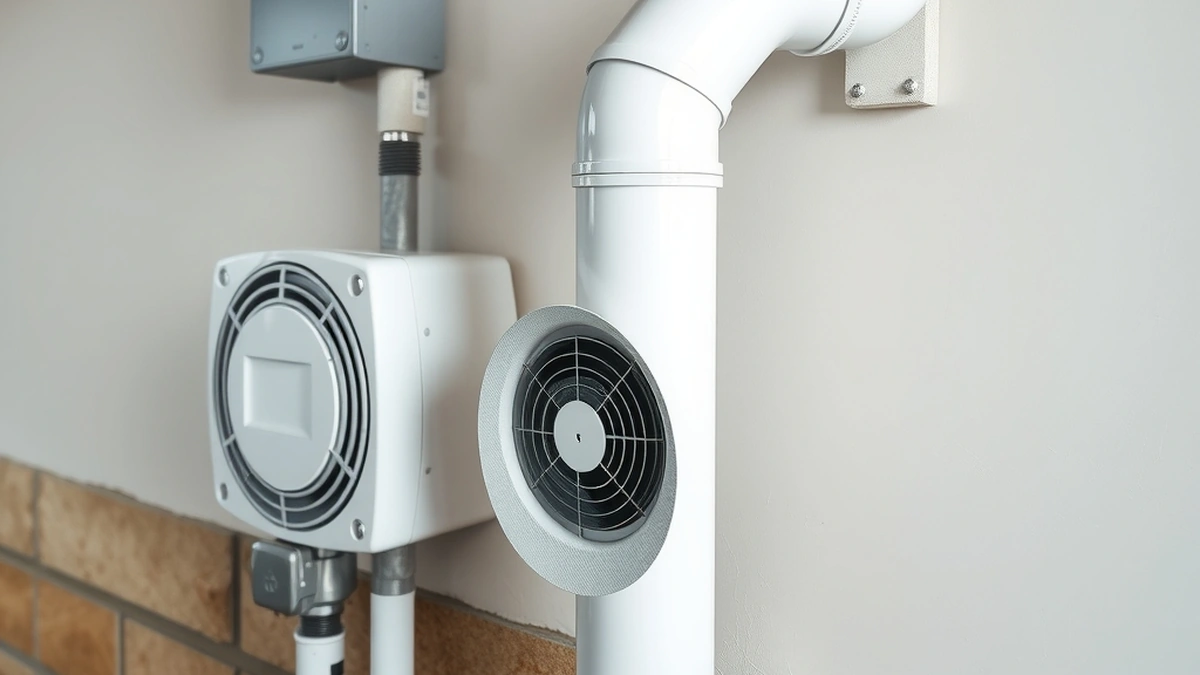
Most radon mitigation systems cost between $800 and $3,000 installed, depending on foundation type, with an average around $1,200 for sub-slab systems.
- EPA action level
- 4 pCi/L
- Consider fixing range
- 2–4 pCi/L
- Average installed cost
- $1,200
- Typical installed range
- $800–$3,000
- Fan replacement
- $150–$450 every 5–15 years
Some links on this page are affiliate links.If you buy through them we may earn a commission at no extra cost to you. We do not accept payment for rankings. Read the full disclosure.
Radon mitigation costs typically range from $800 to $3,000 installed, with the national average near $1,200 for a sub-slab depressurization system. Your foundation type is the biggest cost driver because it determines how radon enters the home and which extraction method works best. This guide breaks down installed cost estimates by foundation type, explains ongoing fan and electricity costs, and shows where testing fits into the process.
How Foundation Type Shapes Mitigation Cost
The EPA action level is 4 pCi/L. Results between 2 and 4 pCi/L fall in the consider-fixing range, and the World Health Organization reference level is 2.7 pCi/L. The average indoor radon level is 1.3 pCi/L, while outdoor air averages 0.4 pCi/L. About one in fifteen homes is estimated to have radon above the action level, and roughly 7.1 million homes may need mitigation.
Once testing confirms a result at or above 4 pCi/L, a certified mitigator evaluates the foundation to select a system. Foundation construction affects how easily suction can be applied beneath the structure, how much piping is needed, and whether additional sealing or membrane work is required. Labor and materials account for most of the installed price, so homes with accessible sub-slab areas usually cost less than homes with crawl spaces, block walls, or complicated footings.
Slab-on-Grade Foundations
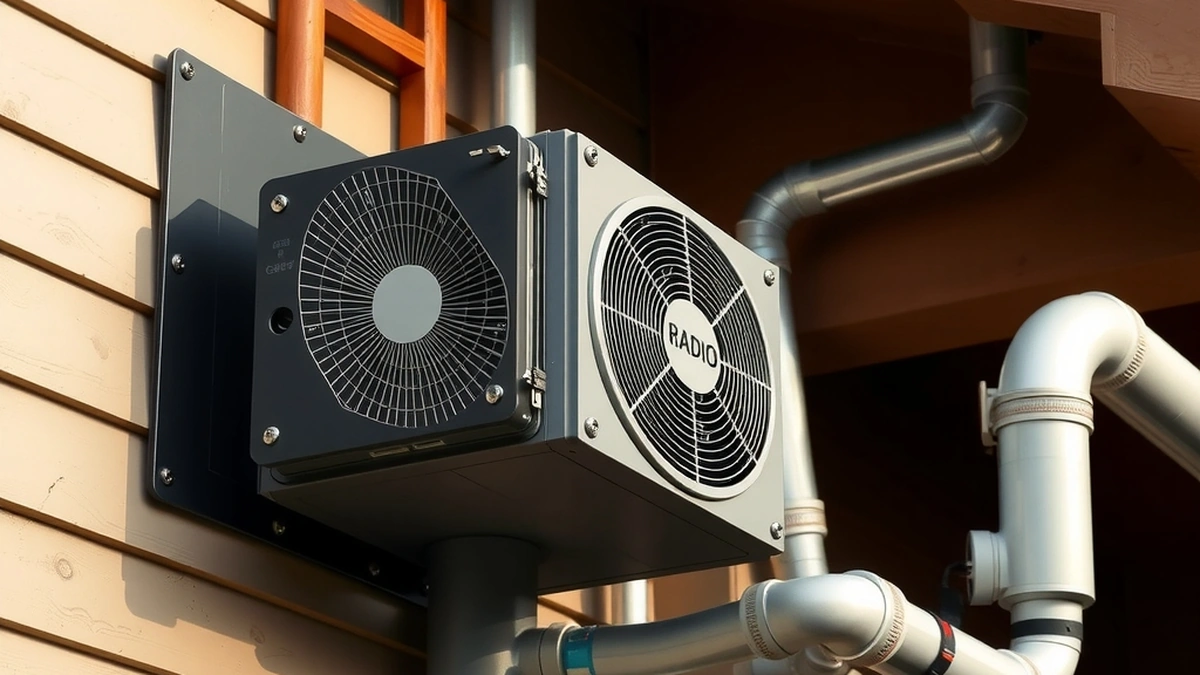
Slab-on-grade homes rest on a concrete slab poured directly over soil. The most common mitigation method is sub-slab depressurization (SSD), also called active soil depressurization (ASD). A contractor cuts one or more suction points through the slab, installs PVC piping, and connects a radon fan to draw air from beneath the foundation before it enters the living space.
Installed costs for SSD or ASD on a slab foundation typically range from $800 to $2,500, with an average near $1,200. A simple home with one suction point and a short exterior pipe run falls toward the lower end. Larger homes, thicker slabs, or homes requiring multiple suction points cost more because of additional drilling, piping, and fan capacity.
Sealing cracks and expansion joints is part of the installation but is not a standalone fix. It helps the fan maintain negative pressure under the slab and reduces conditioned air loss, which improves efficiency and lowers operating cost.
Basement Foundations
Basements use the same sub-slab depressurization approach as slab-on-grade homes, but basement installations often involve more interior piping and aesthetic considerations. Contractors may route pipes through rim joists, basement walls, or closets to keep the system discreet. Installed costs generally fall between $800 and $2,500, averaging around $1,200.
If the basement has a sump pump, the sump lid can be adapted as a suction point, which may reduce drilling and material costs. Finished basements increase labor time if pipes must be concealed behind walls or under floors. For more detail on basement-specific installations, see /radon-mitigation-in-basement/.
Crawl Space Foundations
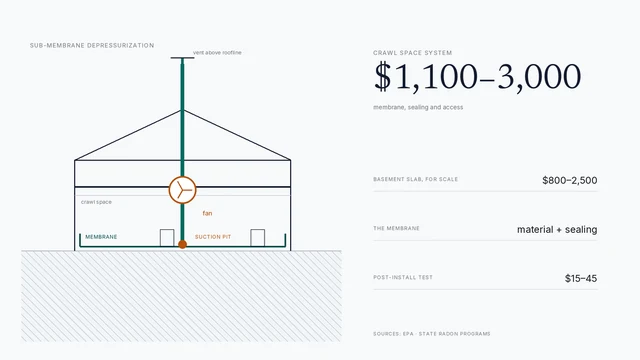
Homes with crawl spaces often use sub-membrane depressurization. A contractor lays a durable plastic membrane over the soil in the crawl space, seals it to the foundation walls and piers, and connects a fan to draw air from beneath the membrane. Installed costs typically range from $1,100 to $3,000.
The higher cost reflects membrane materials, sealing labor, and the need to condition or isolate the crawl space. If the crawl space has a dirt floor and limited clearance, installation takes longer and costs more. Some crawl spaces can use drain tile systems if perimeter drainage exists, which usually costs $800 to $2,500 installed. A full house assessment determines whether sub-membrane, drain tile, or a hybrid approach is appropriate.
Block Wall Foundations
Homes with hollow-block foundation walls can trap radon in the block cores and release it indoors. Block wall mitigation involves depressurizing the wall cores by sealing the top course of blocks and installing pipes connected to a radon fan. Installed costs typically range from $1,000 to $3,000.
This method requires careful sealing to maintain negative pressure within the blocks. If the home also has a basement or slab, the contractor may combine block wall depressurization with sub-slab suction. Multiple techniques increase material and labor costs but may be necessary to bring results below 2 pCi/L, which is the common post-mitigation target.
Passive Systems and Activation
Some newer homes are built with passive radon mitigation components, such as a vent pipe routed from beneath the slab to the roof without a fan. Passive systems rely on natural pressure differences and cost about $500 to $1,500 installed during construction. If testing after occupancy shows radon above the action level, a fan can be added to activate the system.
Activation typically costs $300 to $900, including the fan, electrical connection, and installation. A home with a passive system that tests below 4 pCi/L may not need activation, but retesting every two years is still recommended. More information on system components is available at /radon-system-installation-cost-breakdown/.
Ventilation and Water Treatment Options
Heat recovery ventilators (HRVs) and energy recovery ventilators can dilute indoor radon by bringing in outdoor air. Installed costs range from $1,200 to $3,500. These systems are less common for standalone radon mitigation because they condition the entire home and increase heating and cooling loads, but they may make sense when ventilation upgrades are already planned.
If radon is present in well water, treatment is separate from air mitigation. Water aeration systems cost about $3,500 to $6,500 installed. Granular activated carbon (GAC) systems cost roughly $1,000 to $3,000 installed but require monitoring for radioactive buildup over time. Testing water and air separately is the correct first step; more context on reducing radon sources is at /how-to-reduce-radon-in-your-home/.
Testing Costs Before Mitigation
Before spending on mitigation, confirm the result with a quality test. Short-term kits cost $15 to $45, and long-term kits cost $20 to $50. Professional testing typically costs $150 to $250. Consumer continuous monitors range from $100 to $200. Testing is inexpensive relative to mitigation and determines whether a system is needed at all. If you have not tested yet, start at /testing-for-radon/.
Ongoing Costs: Fans, Electricity, and Permits
Radon fans last about 5 to 15 years. Replacement costs $150 to $450, including labor. A typical 80-watt fan uses approximately 701 kWh per year. At the EIA residential average of 18.16 cents per kWh, that equals about $127 per year in electricity.
Calculation: 80 watts × 24 hours × 365 days = 700,800 watt-hours, or 700.8 kWh per year. Rounded to 701 kWh. At $0.1816 per kWh: 701 × 0.1816 = $127.30 per year.
Some jurisdictions require a permit for radon mitigation work. Permit costs range from $0 to $150 depending on local rules. Your contractor should know whether a permit is needed and include it in the bid. For local permit detail, see /radon-mitigation-permit-cost/.
Choosing a Mitigator and Retesting
Use a mitigator certified by NRPP or licensed by your state. Request a written estimate that lists the system type, suction point locations, fan model, and warranty terms. After installation, test the home within 30 days to confirm performance, then retest every two years. Fans should be checked periodically to ensure they are running, since a failed fan allows radon levels to rise again.
When a fan eventually fails, replacement typically costs $150 to $450. More on fan lifespan and replacement pricing is at /radon-fan-replacement-cost/. Warranty terms vary by contractor and component, so review coverage before signing. See /radon-mitigation-warranty/ for what to expect.
Most radon mitigation systems cost between $800 and $3,000 installed, with slab and basement systems averaging near $1,200. Crawl space and block wall systems often cost more because of additional materials and labor. Testing first confirms whether mitigation is needed, and a certified contractor can match the system to your foundation type and local conditions.
Next, compare testing for radon, how to eliminate radon, how to reduce radon in your home before you commit.
Frequently asked questions
What is the EPA radon action level?
The EPA action level is 4 pCi/L. If your test result is at or above this level, mitigation is recommended.
How much does radon mitigation cost by foundation type?
Installed costs generally range from $800 to $3,000, depending on foundation type and system complexity, with an average near $1,200.
Which foundation type costs the most to mitigate?
Crawl spaces with sub-membrane systems typically cost $1,100 to $3,000, while water aeration systems can reach $3,500 to $6,500.
How often should I retest after mitigation?
Retest every two years after mitigation to confirm the system continues to keep radon below the action level.
Do I need a permit for radon mitigation?
Permit costs range from $0 to $150 depending on your local jurisdiction; some areas require no permit at all.
What certification should a mitigator have?
Look for a mitigator certified by NRPP or licensed by your state radon program.
Sources
Some links are affiliate links.If you buy through them we may earn a commission at no extra cost to you. We do not accept payment for rankings. Read the full disclosure.