Radon fan replacement cost: $150–$450 installed
A replacement radon fan runs $150–$450, about $300 installed on a typical job. Failure signs, labor, model matching and when a new system beats a swap.
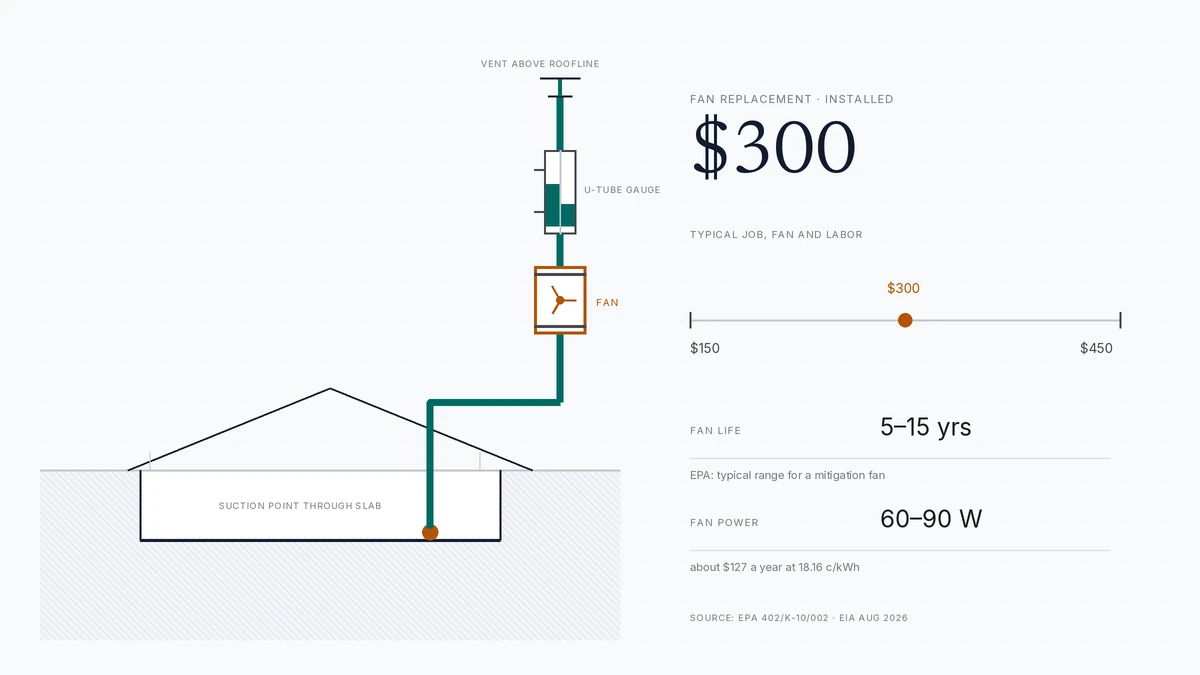
A replacement radon fan costs $150–$450 installed, with most jobs near $300. Fans typically last 5–15 years, and the U-tube going level is the clearest sign one has failed. Replace the fan alone when the pipe and suction points are sound; a full system runs $800–$2,500.
- Fan replacement, installed
- $150–$450
- Typical job
- about $300
- Expected fan life
- 5–15 years
- Fan electricity
- about $127 a year
Some links on this page are affiliate links.If you buy through them we may earn a commission at no extra cost to you. We do not accept payment for rankings. Read the full disclosure.
| Fan replacement | New system | |
|---|---|---|
| When it applies | Fan dead or noisy, pipe and suction points sound | Radon stays high after a new fan, or the pipe is undersized |
| Installed cost | $150–$450, near $300 typical | $800–$2,500, near $1,200 average |
| Time on site | A short visit, one fan swap | Most of a day, sometimes two |
| What gets reused | Pipe, suction point, manometer, circuit, roof penetration | Only the hole through the slab |
| Proof it worked | U-tube offset, then a short-term retest | Post-install test written into the contract |
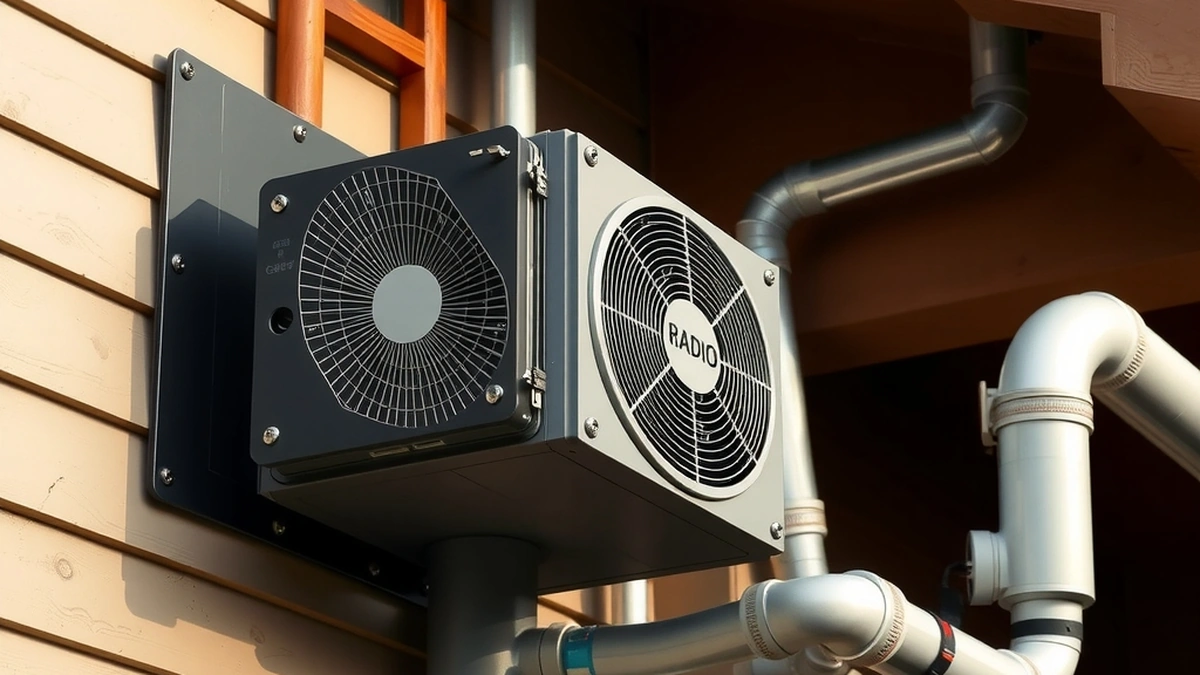
Radon fan replacement is the swap of the inline fan that pulls soil gas from beneath a house and pushes it out above the roofline. The fan is the only moving part in a mitigation system and the only part that wears out. A like-for-like swap runs $150–$450, with most jobs landing near $300 installed.
What a radon fan replacement costs
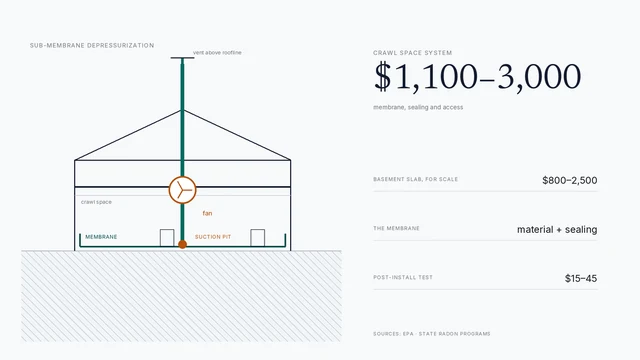
The band is narrow because the job is narrow. EPA puts a complete fan-based system at $800–$2,500 installed, averaging near $1,200, and the full cost breakdown explains where that money goes. A fan replacement is a fraction of it because the pipe, the suction point, the electrical circuit and the roof penetration all stay in place.
| Job | Typical price |
|---|---|
| Fan replacement, installed | $150–$450 |
| Midpoint | about $300 |
| Full system, for comparison | $800–$2,500 |
| Fan electricity, per year | about $127 |
Where you land inside the band depends on the fan, not the house. A standard residential fan on a short pipe run sits at the bottom. A high-capacity model for a long run or a two-point system sits at the top, and so does a fan that has to be ordered in, which adds a second visit.
What the quote should cover
Five lines belong in a fan replacement quote: the fan with a model number, two flexible couplings and their clamps, the labor, a manometer check with fluid top-up, and disposal of the old unit. Anything missing from that list is either included silently or billed later.
Ask two questions before you accept. First, does the price include a post-swap radon test? Most do not, and without one you have replaced a part without proving the system works. Second, does the new fan draw more power than the old one? Residential mitigation fans run 60–90 W, comfortably inside a standard circuit, but a high-capacity model on a shared circuit is worth checking before it trips a breaker.
Signs the fan has stopped working
The system has one honest indicator: the U-tube manometer mounted on the pipe. While the fan runs, the fluid in the two columns sits at different heights. That offset is the suction. Read it before you call anyone.
- Level fluid. No pressure difference. Check the breaker, then the pipe for ice or a blockage at the vent, then the fan.
- Noise. Grinding, rattling or a hum that changes pitch is bearing wear. A fan louder than it was last winter is on its way out.
- Moisture or frost. Water in the pipe, condensation in the housing, or ice on the fan. A frozen fan stalls, and a stalled fan overheats.
- Age. EPA describes a typical service life of 5 to 15 years. Past ten years, budget for the swap rather than waiting for it to fail in January.
- A climbing number. A retest at or above 4 pCi/L with an intact pipe usually means the fan is no longer moving enough air.
- Silence. Put a hand on the housing. A working fan vibrates.
A flat U-tube has four common causes and only one of them is the fan: a tripped breaker, a blocked or iced pipe, a coupling that has slipped off, or water sitting in the low point of the run. A contractor who arrives with a fan and no gauge is guessing at your expense.
The same logic applies to noise. A rattle can be a loose clamp rather than a bearing, and a clamp costs nothing to tighten. Ten minutes of diagnosis separates a fan swap from a wasted afternoon.
Match the model, not the horsepower
Radon fans are selected by airflow at a given static pressure, which is why the model number matters more than the size of the box. The number is stamped on the fan housing and repeated on the system label attached to the pipe. Photograph both before you call a supplier or a contractor.
If the original model is discontinued, the replacement should match its flow and pressure curve rather than simply exceed it. An oversized fan pulls harder than the slab and pipe need, draws more power, runs louder and does not lower the radon level further. The systems guide explains how fan sizing relates to suction points and pipe diameter.
Fan replacement versus a new system
Replace the fan alone when the pipe is sound, the suction points still hold, and the radon level was low before the fan died. Replace the system when a new fan fails to bring the level down, when the pipe is undersized or leaking at a joint, when a renovation changed the slab, or when the original install has no label, no permit and no post-install test.
The short version of that decision is $300 against $1,200. A new system is worth it when the old one was never right. It is wasted money when the only broken part is the fan.
What the fan costs to run
EPA describes mitigation fans as drawing under 90 watts, and most residential models sit between 60 and 90 W. At the August 2026 US average of 18.16 cents per kWh, an 80 W fan running continuously uses about 701 kWh a year and costs roughly $127. EPA’s own budget line for operating cost is $50–$200 a year.
A like-for-like replacement does not change that number. A bigger fan does. Read the wattage on the spec sheet and run the calculator before you accept an upgrade you did not ask for. The arithmetic is watts × 8.76 for annual kWh, then kWh × your rate.
Warranty and service life
The fan warranty comes from the manufacturer and the labor warranty comes from the installer. They are rarely the same length. Ask for both in writing and note the start date, because some manufacturers count from the date on the fan plate rather than the day it was installed.
Service life is 5 to 15 years. A fan that fails at year four is usually a warranty conversation. One that fails at year fourteen is end of life, and the only question is which model goes back in.
Doing it yourself, and when not to
A same-model swap is within reach for a homeowner who is comfortable with a breaker panel and two couplings. Kill the breaker, confirm the fan is dead, unclamp both couplings, lift the old fan out, fit the new one with the airflow arrow pointing away from the house, re-clamp, restore power, watch the U-tube. The DIY guide covers the tools and the pitfalls.
It is not a job for anyone who needs to change pipe size, add a suction point or run a circuit. On an interior run, opening the pipe briefly opens a path from the soil into the basement, so do the work when the house can be aired and get the new fan on promptly.
Prove the fix and log it
The U-tube should show its offset within a minute or two of restart. No offset means a leaking coupling, a fan running backwards, or a blocked pipe, and the fix is not another fan.
Then test. Run a short-term test after the system has operated for at least 24 hours; the testing section covers placement and closed-house conditions. A reading below 2 pCi/L is the target. At or above 4 pCi/L, the fan was not the problem and the system needs diagnosis.
Write the swap date, the model number and the test result on the system label or in the folder with the install paperwork. Retest every two years, and keep the receipt for the fan. The next owner will ask for all of it.
How to do it
- Read the U-tube firstCheck the manometer before you call anyone. Level fluid means no suction. Then check the breaker, the pipe for ice or a blockage, and both couplings before you blame the fan.
- Photograph the model plateThe fan housing and the system label on the pipe carry the model number and install date. A photo of both is what a supplier and a contractor need to quote the right replacement.
- Price the fan and the labor separatelyAsk for the model number, the fan price, the labor price and whether a post-swap radon test is included. A quote that names no model is a quote you cannot compare.
- Ask about the circuit and the wattageResidential mitigation fans draw 60–90 W. If the replacement is a high-capacity model, confirm the existing circuit and check what the extra watts cost per year before you agree.
- Swap, then watch the gaugeAfter power is restored, the U-tube should show an offset within a minute or two. No offset means a coupling is leaking, the fan is running backwards, or the pipe is blocked.
- Retest and log the dateRun a short-term test after at least 24 hours of operation, then write the date, model and result on the system label. Retest every two years after that.
Frequently asked questions
How much does it cost to replace a radon fan?
Expect $150–$450 installed, with a typical job near $300. The fan itself is the larger part of the bill; labor is a short visit because the fan unbolts from two rubber couplings and the new one drops into the same pipe. High-capacity models and long pipe runs push the price to the top of the band.
How long does a radon fan last?
EPA describes a typical service life of 5 to 15 years. A fan running continuously in a cold climate usually lands in the lower half of that range. Past ten years, budget for the replacement instead of waiting for the U-tube to go flat in January.
How do I know my radon fan has failed?
The U-tube manometer is the indicator. While the fan runs, the fluid in the two columns sits at different heights. If the columns level off, suction has stopped. Check the breaker, then the pipe for ice or a blockage, then the fan. Grinding noise, moisture in the housing and a climbing radon retest are the other signals.
Can I replace a radon fan myself?
A like-for-like swap is within reach if you are comfortable with a breaker panel and two couplings: same model, same pipe size, power off, airflow arrow pointing away from the house. Do not attempt it if the pipe has to be modified, a suction point added, or a circuit run. A mistake leaves the system pulling air from the basement instead of the soil.
Does a new fan need a new radon test?
Yes. Run a short-term test after the fan has operated for at least 24 hours. A result below 2 pCi/L is the usual target. If the level stays at or above 4 pCi/L with a new fan and an intact pipe, the problem is the system, not the fan, and it needs diagnosis rather than another part.
Is a bigger fan better?
No. Radon fans are selected by airflow at a given static pressure, and the replacement should match the original model's curve rather than exceed it. An oversized fan draws more power, runs louder and pulls harder than the slab and pipe need, without lowering the radon level further.
Sources
Some links are affiliate links.If you buy through them we may earn a commission at no extra cost to you. We do not accept payment for rankings. Read the full disclosure.